
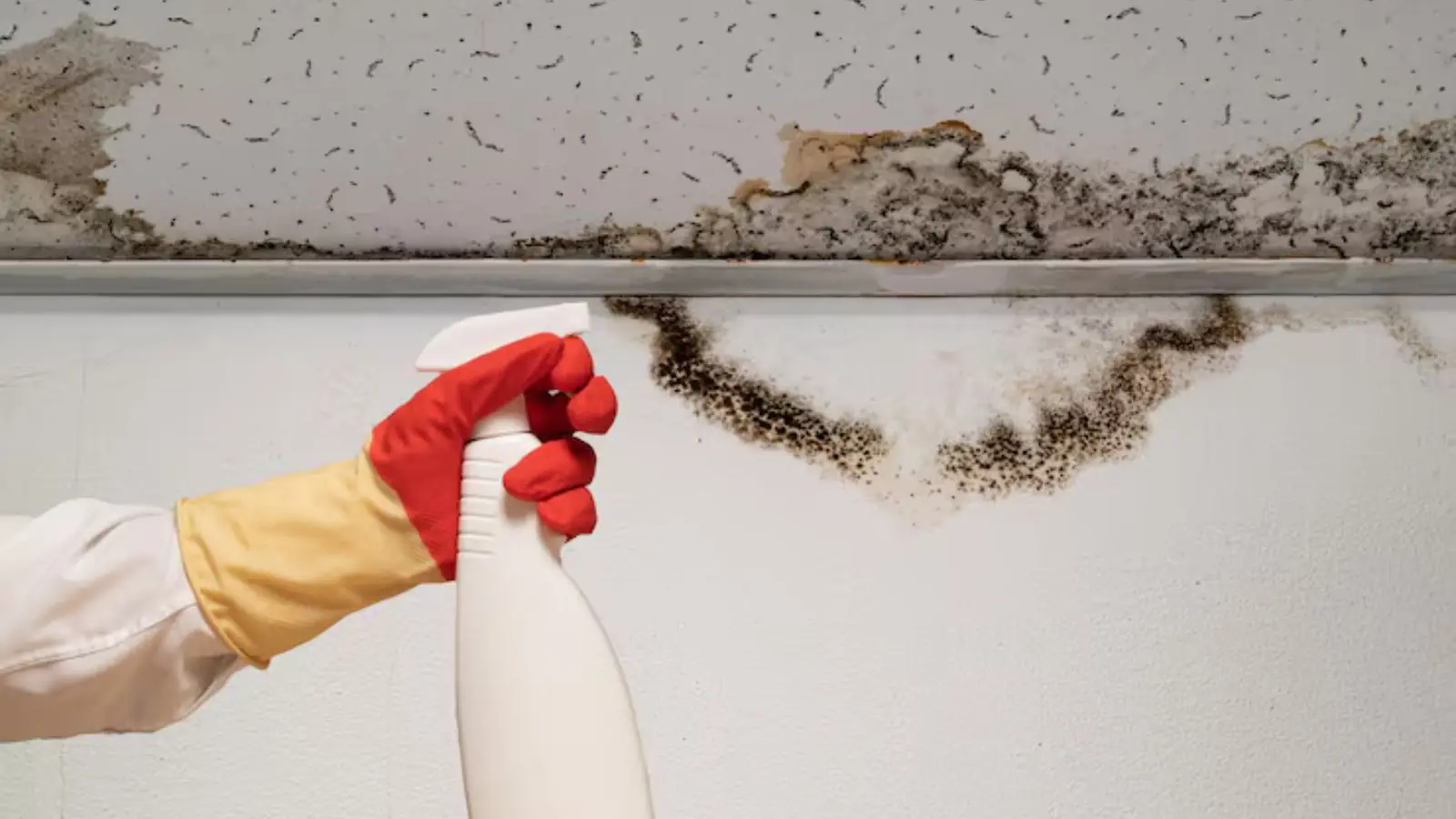
What black spots on a ceiling usually mean
Black mold on a ceiling in DeSoto, TX points to one thing before anything else. Moisture reached the ceiling and stayed there. Mold does not grow on dry drywall, so the question is where the water came from and whether it is still coming.
Dark spots are often a color, not a species. Many molds look black or dark green, and some stains that look like mold are dirt, soot or old water marks. Only testing by a licensed assessor can say what is growing, and questions about symptoms belong to a physician.
Where the moisture usually comes from
- A leak from above. An upstairs toilet seal, tub drain or supply line can drip into the ceiling below for weeks before a stain appears.
- A roof leak. Missing shingles or failed flashing let water into the attic and through insulation to the drywall.
- An air conditioner condensate line. A clogged drain or a full pan can overflow into the ceiling.
- A bathroom with weak ventilation. Steam condenses on a cold ceiling and keeps the surface damp.
- Condensation on ductwork. Cold ducts in a hot attic sweat and wet insulation above the ceiling.
The fix for the mold depends on the source. If you remove the mold and leave a dripping line behind, the spots return.
What to check before you touch anything
Look above the spot. If it is under a bathroom, check the tub and toilet connections. If it is under a roof, look at the attic for wet insulation. Press the drywall gently with a gloved hand. A soft or crumbly spot means the material has taken on water for some time.
Take photos with a timestamp and write down when you first saw it. Those notes help if you file an insurance claim, since policies usually separate sudden events from slow leaks.
| Visible mold area | Who can do the work | Notes |
|---|---|---|
| Under 25 contiguous square feet | A homeowner, with exemptions that apply | Fix the leak first. Porous drywall is usually cut out |
| 25 contiguous square feet or more | A licensed Texas mold remediation contractor | Follows a protocol written by a licensed assessor |
| Any size, with testing wanted | A licensed assessor and a licensed lab | Samples must go to a licensed lab |
| Any size, in a rental or sale | Ask the landlord, agent or lender what they require | A licensed remediator can issue a Certificate of Mold Damage Remediation |
Why painting over it does not work
A coat of stain-blocking paint hides the color but does not remove the growth, and it does nothing about the water. If the drywall stays wet, the paint peels and the spots return. Cutting out the affected section is usually the answer for porous materials such as drywall.
Small surface spots on a sealed surface may be cleaned. Anything that soaked in needs to come out. If the ceiling sags, bubbles or feels soft, the whole panel may be wet and the cavity above needs drying.
Texas note: the 25 square foot line and the licensing rule
The Texas Department of Licensing and Regulation says areas of visible mold of less than 25 contiguous square feet can be cleaned up by people who are not licensed, although exemptions apply. Mold assessment, meaning inspecting and testing, and larger remediation jobs need licensed professionals.
Licensees must give the client a Consumer Mold Information Sheet before any mold-related activity begins. If you hire for a larger job, ask to see the license and ask for that sheet.
When to call a professional
Call a professional if the area is larger than a small patch, if you cannot find the source or if the ceiling is soft or sagging. Call early if the leak came from contaminated water or if the same spot has returned after cleaning.
The mold remediation page explains testing, containment and removal. If water is still running, start with emergency water removal to stop the damage first.
Crews work across DeSoto and nearby towns, including Duncanville and Red Oak.
Do I need a licensed professional in Texas for a black patch on my ceiling?
If the visible area is under 25 contiguous square feet, the state says unlicensed people can clean it up, subject to exemptions. Testing and larger jobs need licensed professionals.
Whatever the size, the water source has to be fixed or the mold will come back.
Is it safe to scrub black mold off a ceiling myself?
Scrubbing can spread spores into the room, and wet drywall needs to be cut out, not wiped. If you decide to clean a small area, wear gloves, eye protection and a mask rated for the job, and keep the room ventilated.
Questions about symptoms belong to a physician.
Will homeowners insurance cover ceiling mold?
The Texas Department of Insurance says mold removal is generally excluded except to repair damage from a covered risk. If a sudden event like a burst pipe caused it, the mold may be part of the claim.
Check your policy and ask your insurer. Photograph before you clean.
Does mold on the ceiling mean the roof leaks?
Not always. Bathroom steam, an overflowing condensate line, ductwork condensation and plumbing leaks above all cause ceiling mold.
A technician can check moisture readings and find the source with a thermal imaging camera.