
Wet wall, soggy carpet or a musty smell after a leak? That is when mitigation matters
If a wall feels cool and damp, carpet squishes underfoot or a room smells musty a day after a leak, water is still inside the structure. The trade name for stopping that damage is water mitigation. It is the drying and containment work that keeps a small loss from becoming a rebuild.
Emergency water mitigation in the first 24 to 72 hours
Mitigation is urgent because water travels. It wicks up drywall, spreads under baseboards, drops through ceilings and settles into insulation. The 24/7 line is open at any hour, and the first days after a loss are when drying does the most good.
While you wait for the crew, stop the source, move valuables out of the wet area and open nothing that vents moisture into dry rooms. Take photos of every wet surface before anything moves.
Stop the source
Close the shutoff for the failed fixture or the main water valve.
Document first
Photograph wet walls, floors and ceilings with a timestamp. Include the source of the leak.
Protect what you can
Lift furniture legs onto foil or blocks and move small items to a dry room.
Stay clear of power
Leave the power alone near wet outlets. If anything smells like gas, leave and call 911.
What water mitigation involves
Mitigation has four parts. The crew finds the wet areas, removes standing water, sets up drying equipment and checks the readings until the structure is dry. A written scope records what was wet, what stayed and what had to go.
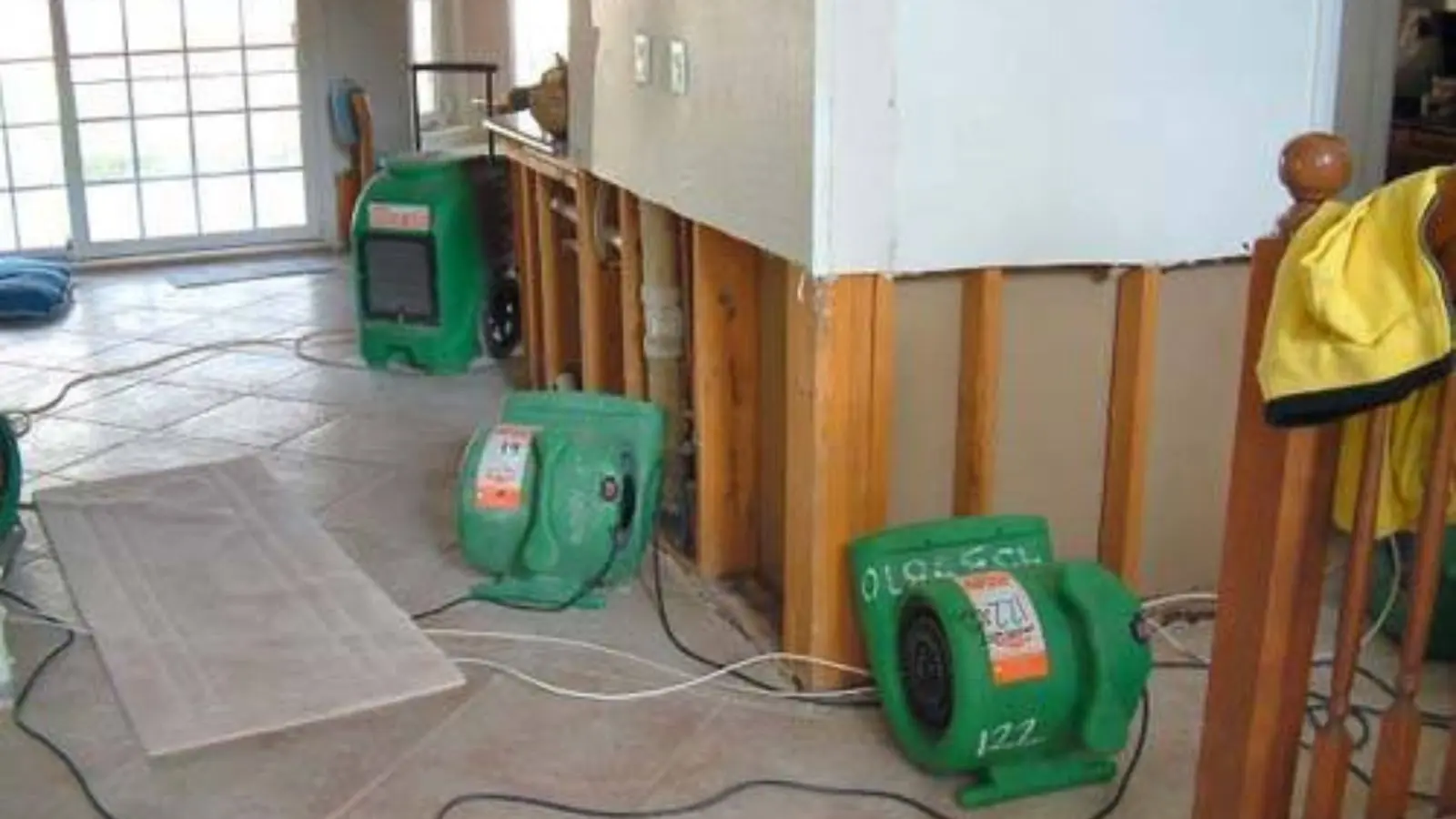
Moisture mapping comes first. The crew reads wall, floor and ceiling surfaces with moisture meters and uses a thermal imaging camera to see temperature differences that point to wet material. The result is a map of where the water went, which rarely matches the visible stain.
Why drying equipment is placed from a map
Air movers and dehumidifiers go where the map says, not where there is floor space. A wall cavity might need air pushed in through small holes, and a closet floor might need a mat system that pulls water out of the subfloor.
| Equipment | What it does | Where it is used |
|---|---|---|
| Moisture meters | Read water content in drywall, wood and concrete | Every visit, to track progress |
| Thermal imaging camera | Shows temperature differences that suggest wet material | Initial assessment and spot checks |
| Air movers | Push air across wet surfaces to speed evaporation | Floors, walls and carpet edges |
| LGR dehumidifiers | Pull moisture out of the air so it does not return to materials | Sealed rooms with air movers running |
| Injection or mat systems | Move drying air into wall cavities or under hard floors | Walls that are wet behind finished surfaces |
Structural drying
Structural drying means bringing the framing, subfloor, drywall and insulation back to a normal moisture level without tearing out more than necessary. It is done by combining airflow, controlled humidity and daily monitoring.
The crew sets a dry standard for each material, usually by measuring an unaffected area of the same material in the house. Each day the readings are logged. If a wall is not dropping, the crew changes the airflow or opens the wall.
Some materials are not worth saving. Wet insulation and carpet pad are usually removed, and drywall that stayed wet for days or soaked through may be cut out. Hardwood can sometimes be dried in place, and the call data our dispatchers hear shows cupping floors are a common complaint after slow leaks.
The goal is a record that shows the structure is dry before anything is covered. Closing a wall over damp framing is how mold starts, and that is the next page in the chain, mold remediation.
Not sure how far the water went?
Call the line and describe what you see. The dispatcher explains how the assessment works and when a crew can come.
Classes of water damage and what they mean for drying
The S500 standard sorts water losses into classes that describe how much moisture the materials hold. The class tells the crew how much equipment to bring and how long the job is likely to run.
| Class | Description | Drying effort |
|---|---|---|
| Class 1 | Small area, low-porosity materials such as concrete | Little equipment, quick drying |
| Class 2 | Whole room, carpet and pad, wet walls part way up | Several air movers and a dehumidifier |
| Class 3 | Water came from above, saturating ceilings, walls and floors | Heavy equipment and often material removal |
| Class 4 | Deep saturation in materials such as hardwood or concrete | Specialized drying and longer schedules |
Mitigation and your insurance claim
Mitigation records are the paperwork an adjuster looks at first. Photos, moisture readings and equipment logs show what was wet, when drying started and how long it took.
Sudden and accidental water damage is often covered by homeowners insurance, and gradual leaks often are not. The Texas Department of Insurance advises reporting a loss promptly and making only temporary repairs before the insurer sees the damage. Check your policy and ask your insurer what applies. We cannot promise a claim will be approved.
What affects the price of water mitigation
- Class and category of water. Deeper saturation and contaminated water take more work.
- Area affected. More rooms mean more equipment.
- Materials. Hardwood, plaster and thick framing hold water longer than drywall.
- Days on site. Equipment days and monitoring visits are part of the scope.
- Access. Wall cavities, tight crawl spaces and multi-story leaks need more setup.
Want your real number? Call (972) 945-2885. The dispatcher explains how the assessment works, and the scope and price are explained before work starts.
Mitigation across DeSoto and nearby towns
Crews cover DeSoto and the towns around it. If the loss involves standing water first, read about emergency water removal. After the building is dry, water damage repair explains rebuilding.
We also work in Cedar Hill, Lancaster and Red Oak, each with its own ZIP codes and local conditions.
Do you handle water mitigation emergencies at night or on weekends in DeSoto?
Yes. Mitigation is time-sensitive, so the line stays open 24/7 and crews can start drying in the middle of the night. The sooner drying starts, the fewer materials end up in the dumpster.
Ask the dispatcher for the expected arrival when you call. It depends on crew availability and where you are in the service area.
How long does it take to dry a wet house?
Many residential losses dry in three to five days, though a slow leak that soaked a wall for weeks or a large flood can take longer. The only reliable answer comes from moisture readings taken each visit.
Equipment stays until the materials reach their dry standard, then it comes out. If a reading is high, the crew adjusts the setup instead of pulling the equipment early.
Can I rent air movers and dehumidifiers instead?
We do not offer equipment rental. The equipment only works when it is placed from moisture mapping and checked daily, and a surface that feels dry can hide wet framing.
Dehumidifiers from a hardware store are fine for damp air after the job is finished, but they are not a substitute for structural drying.
What does a dehumidifier actually do in a drying job?
Air movers push air across wet surfaces and lift moisture into the air. Low grain refrigerant dehumidifiers then pull that moisture out of the air so it does not settle back into materials.
Drying works as a system. Running only one of the two leaves moisture in the room and slows the whole job.
Will my insurance pay for drying?
Many policies cover drying after a sudden and accidental loss such as a burst pipe, and many exclude long-term leaks and flood water. The details are in your policy.
Crews log moisture readings and equipment days so your adjuster can see what was done. Check your policy and ask your insurer what applies.