
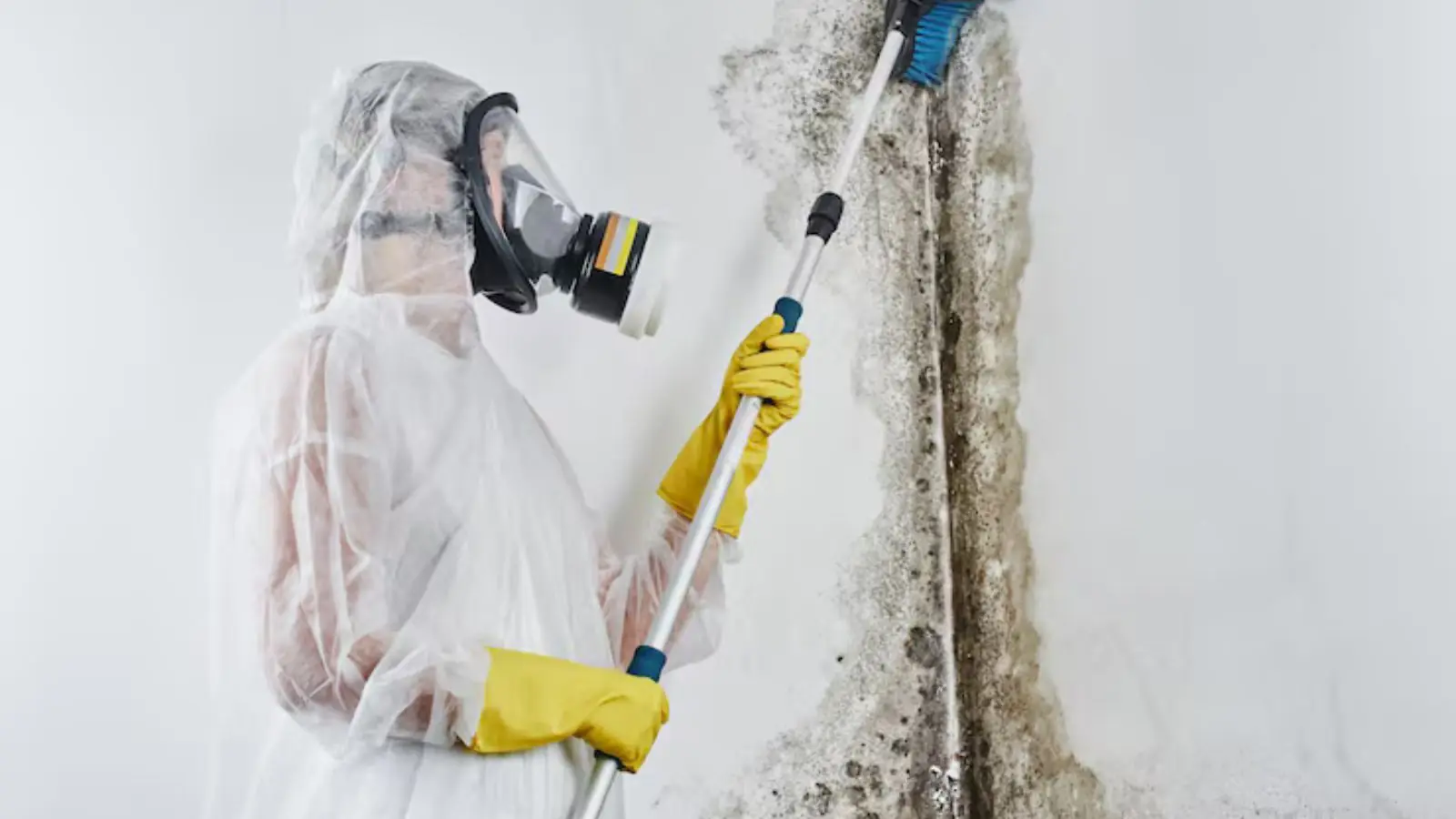
Dark spots on the ceiling or a musty smell after a leak? That is when mold remediation comes in
If you see dark spots on a ceiling, fuzzy growth in a closet or smell something musty after a leak, moisture may have fed mold growth. The trade name for the fix is mold remediation. It means finding the water source, containing the area and removing contaminated materials.
What mold remediation involves
Mold remediation is the controlled removal of mold-damaged materials and the cleaning of surfaces, done to the ANSI/IICRC S520 standard. The crew contains the area, removes damaged materials and filters the air to keep spores from spreading to other rooms.
The sequence matters. The moisture source is fixed first, because mold returns to wet material. Next the area is contained with plastic sheeting and negative air. Then damaged porous materials are removed, surfaces are cleaned with HEPA vacuums and damp wiping, and the area is dried.
Mold after water damage
Mold needs moisture, and water damage supplies it. Wet drywall, carpet pad, insulation and wood framing can start growing mold within a day or two if they stay wet. That is why drying fast, as in water mitigation, is the best protection.
The usual sources are quiet ones. An upstairs toilet seal that leaks, an air conditioner condensate line that backs up, a roof leak over a closet or a sink drain that drips into a cabinet can all feed hidden growth. By the time a stain shows, the material behind it has often been wet for weeks.
Fixing the leak comes first. A mold job done without stopping the water is only temporary. The crew checks moisture readings, repairs or recommends repairs to the source and then handles the mold.
Mold testing and inspection
Texas treats mold assessment and mold remediation as separate licensed activities. A licensed assessor inspects, collects air or surface samples and sends them to a licensed lab. A licensed remediation contractor then follows a protocol developed by a licensed assessment consultant.
The Texas Department of Licensing and Regulation says licensees must give the client a Consumer Mold Information Sheet before any mold-related activity starts. When remediation is finished, a licensed remediator can issue a Certificate of Mold Damage Remediation to the property owner.
Independent clearance testing is worth considering when the job is large, when a buyer or lender is involved or when you want a second opinion. The assessor who writes the protocol should not be the same company doing the removal, so ask who is doing what.
| Role | What they do | Texas license |
|---|---|---|
| Mold assessor | Inspects, takes samples, writes the remediation protocol | Licensed assessor or consultant |
| Mold remediator | Contains and removes mold, cleans and dries | Licensed remediation contractor |
| Homeowner | May clean visible mold under 25 contiguous square feet | No license required, exemptions apply |
| Laboratory | Analyzes samples | Licensed lab |
Mold removal and black mold cleanup
Black mold is a color, not a diagnosis. Many species look dark, and color alone does not tell you what is growing or how much of it there is. Only testing by a licensed assessor can say more, and questions about symptoms belong to a physician.
Cleanup depends on the material. Hard, non-porous surfaces such as tile and glass can be cleaned. Porous materials such as drywall, ceiling tile and insulation are usually cut out and replaced. Spraying and painting over mold hides it without solving the cause.
If the affected area is small, you may be allowed to clean it yourself, but find the leak first. If it is larger than 25 contiguous square feet, or if you cannot find the source, call a licensed professional.
Mold clearance for a home sale or loan
Real estate deals sometimes stall over mold. A buyer inspection may find growth in an attic or closet and the lender may ask for proof the problem was fixed before it funds the loan. The process starts with a licensed assessment and, if needed, remediation followed by clearance.
The paperwork in Texas is the Certificate of Mold Damage Remediation, which only a licensed remediator can issue to the property owner. Ask your agent and lender what they accept before you start, since we cannot promise any party will approve a document.
Mold after a leak?
Call the line and describe what you see and where the leak was. The dispatcher explains the next step.
Mold, insurance and what to document
The Texas Department of Insurance says mold removal is generally excluded from home policies except to repair damage from a covered risk. If your mold followed a sudden and accidental event, such as a burst pipe, it may be part of the claim. A slow leak is more often excluded.
Document the leak source, the date you noticed it, photos of the growth and any repair invoices. Report the loss to your insurer promptly. Check your policy and ask your insurer what applies.
What affects the cost of mold remediation
- Area affected. Larger areas need more containment and more removal.
- Materials. Drywall and insulation are cut out, and framing may need cleaning.
- Access. Attics, crawl spaces and closets add setup time.
- Testing. Assessment, lab fees and clearance testing are separate from removal.
- Source repair. Fixing the leak and drying the area are part of the job.
Want your real number? Call (972) 945-2885 and the dispatcher explains how the assessment works. The scope and price are explained before work starts.
Mold remediation in DeSoto and nearby towns
Crews cover DeSoto and nearby towns, including Cedar Hill and Duncanville. If the leak is still active, start with emergency water removal. For the rebuild after mold is gone, see water damage repair.
What does a mold inspection or assessment involve?
A licensed mold assessor inspects the property, finds moisture sources and may collect air or surface samples, which go to a licensed lab. The assessor writes a protocol that a remediator follows.
Texas licenses both roles through the Texas Department of Licensing and Regulation, so ask to see a license before anyone collects samples.
Can mold be removed without a license in Texas?
The state says areas of visible mold under 25 contiguous square feet can be cleaned by people who are not licensed, though exemptions apply. Larger jobs and mold testing need licensed professionals.
Even for a small area, find and fix the moisture source first. Cleaning mold without stopping the leak only buys time.
I am buying or selling a house and the lender wants mold cleared. What do I need?
Ask your lender and your agent what documentation they want. In Texas, a licensed remediator can issue a Certificate of Mold Damage Remediation to the property owner when the work is complete.
Independent clearance testing by a licensed assessor adds a second set of eyes. We cannot promise any lender will accept a document, so confirm the requirement first.
Does homeowners insurance cover mold removal?
Usually only when the mold results from a covered loss, such as a sudden pipe burst. The Texas Department of Insurance says mold removal is generally excluded except to repair damage from a covered risk.
Check your policy and ask your insurer before you start work, and photograph everything.
Will mold come back after remediation?
No honest contractor can promise that. Mold grows when moisture returns, so the best protection is fixing the source and keeping materials dry.
The remediation protocol and clearance steps reduce the chance of leftover growth, but they cannot control future leaks.
Should I use bleach on mold?
Bleach is not a fix for porous materials such as drywall, because the discoloration lifts but the material stays wet underneath. Never mix bleach with ammonia or other cleaners.
For areas over 25 square feet, a licensed remediator follows a protocol instead of spraying chemicals. Questions about symptoms belong to a physician.