
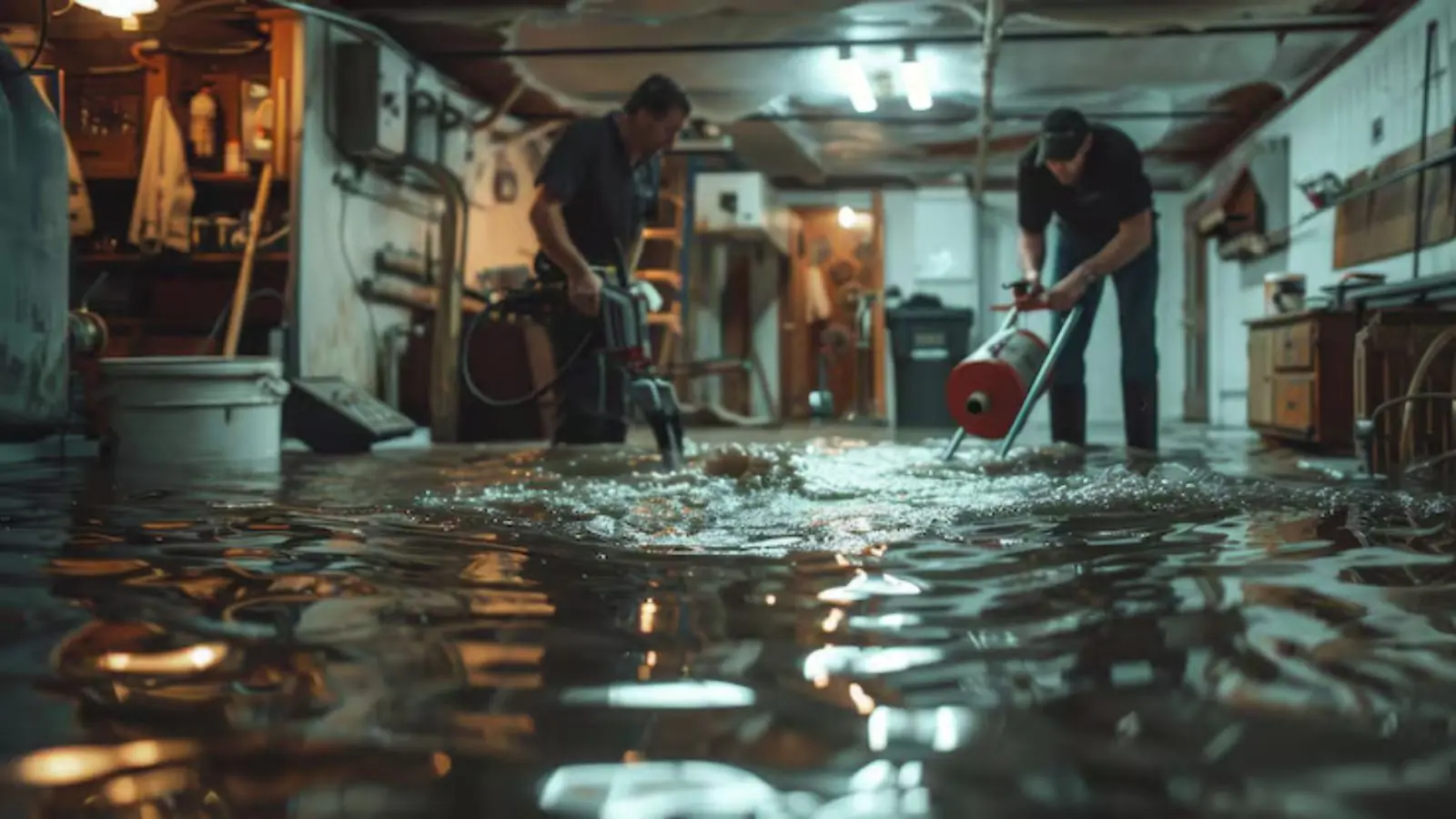
When standing water is an emergency
Water that is still running, still rising or already inside walls is an emergency, and the 24/7 line is open right now. Every hour it sits, water moves into drywall, flooring and framing and the job grows.
While you wait for the crew, stop the source if you can reach it safely. Keep people and pets out of the water, lift valuables off the floor and take photos of the damage before anything is moved.
Stop the source
Close the main water valve or the shutoff under the fixture that failed. If you cannot find it, call the line and the dispatcher will talk you through it.
Power and gas
Turn off power to wet areas only if you can reach the panel without stepping in water. If you smell gas or see sparks, leave and call 911 first.
Lift and protect
Move rugs, small furniture, electronics and paperwork out of the water. Leave heavy furniture for the crew.
Keep clear
Keep children and pets out of standing water. Wear waterproof boots and gloves if you must walk through it.
What emergency water removal involves
Emergency water removal is the fast, physical part of a water loss. The goal is to get standing water out of the building before it spreads into materials that are expensive to replace.
Crews use submersible pumps for deep water and portable extraction units for carpet and hard floors. For larger losses a truck-mounted unit pulls water through a hose from the street. Wet vacuums finish corners, stairs and tight spots.
Once the standing water is out, the crew checks how far moisture traveled. Moisture meters read wet drywall and subfloor, and a thermal imaging camera shows cold, wet patches behind finished surfaces. Those readings decide whether drying can start in place or whether materials have to come out.
| Category | Typical source | What happens |
|---|---|---|
| Category 1 | Clean supply line, sink overflow, a broken pipe | Extract quickly and dry. Materials can often stay if they are dried within a day or two. |
| Category 2 | Washing machine or dishwasher discharge, aquarium, toilet overflow without solids | Extract, remove porous materials such as carpet pad, clean and dry the structure. |
| Category 3 | Sewage backup, river or creek water, long-standing water | Extract with protective gear, remove porous materials, clean and sanitize before any rebuild. |
Burst pipe water damage
A burst pipe moves a lot of water in a short time. Supply lines run at household pressure, so a split fitting can put gallons on the floor every minute until the main valve is closed.
Your first move is to find the main shutoff and close it. Know where it is before you need it, and ask your water utility if you cannot find the one at the meter. Then open a faucet at the lowest point to drain what is left in the line.
Freezing weather is a real trigger in North Texas. NOAA reported that the February 2021 cold outbreak brought the coldest air to much of Texas since December 1989, and a Winter Storm Warning covered every Texas county in mid-February. If a hard freeze is forecast, open cabinet doors under sinks along exterior walls and let a faucet drip. After a thaw, check ceilings and walls for stains. A pipe can split while frozen and only leak once the ice melts.
After a pipe bursts the crew finds the wet areas, extracts the water and sets up drying. Fixing the pipe itself is plumbing work. Many callers hire a plumber the same day and use the restoration crew for the water.
Water coming from a split pipe?
Close the main valve if you can reach it, then call. The 24/7 line is open and a dispatcher will explain the next step.
Water heater and appliance failures
Water heaters, washing machine hoses, dishwasher lines and refrigerator ice-maker lines cause a large share of indoor flooding. They fail without warning and often while no one is home, so the water can run for hours.
Local rules matter if your water heater fails. DeSoto Building Inspections lists water heater replacement as a common project that needs a permit and an inspection. The city page also says a gas water heater in or reachable from a garage must be raised 18 inches above the floor when it is replaced. Ask your plumber to pull the permit and confirm the height before the old unit goes out.
For a washing machine hose, closing the two supply valves behind the machine stops the flow. Replacing rubber hoses with braided hoses is a cheap fix, and shutting the valves when you leave on a long trip adds a layer of protection.
Crawl spaces, low rooms and garages
Water that cannot drain finds the lowest place in the structure. In some homes that is a crawl space, in others a garage, a below-grade room or the lowest floor of a split-level.
Standing water in a crawl space is often missed because no one looks there. Signs include a musty smell, sagging insulation, soft floors above the space and a rise in humidity inside the house. Extraction in a tight space needs small pumps and often a technician working on a plastic sheet.
Electrical, gas and sewage safety first
Water and electricity do not mix, and the risk is not always visible. If water has reached outlets, appliances or the electrical panel, stay out of the room. Turn the power off only if you can reach the panel while standing on dry ground, and never touch a switch while wet.
If you smell gas, see sparks or hear buzzing, leave the building and call 911 and your utility before you call the restoration line. Electrical and gas hazards come first. Restoration can wait a few minutes, and your safety cannot.
Sewage is its own category of hazard. If a toilet, tub or floor drain backs up, keep everyone out of the water and do not try to clean it yourself. The flood damage restoration page explains how crews handle contaminated water.
What affects the cost of emergency water removal
- Water category. Contaminated water means protective gear, more material removal and more cleaning.
- Depth and area. More square footage and deeper water take longer to extract.
- Materials. Carpet and pad, hardwood, laminate and drywall react differently to saturation.
- Access. A crawl space or a second-floor leak adds time and equipment.
- What follows. Extraction usually leads to drying, cleanup and repair, and each phase adds to the scope.
Your policy may help with a sudden and accidental loss such as a burst pipe, while flood water and long-term leaks are commonly excluded. Check your policy and ask your insurer before you assume anything. Want your real number? Call (972) 945-2885 and the dispatcher will explain the assessment.
Where crews go for water removal
Crews work across DeSoto, including the neighborhoods along Hampton Road, Belt Line Road and Pleasant Run Road, and reach nearby towns for emergency calls. See the pages for Cedar Hill, Duncanville and Lancaster if you are just over the city line.
If the water is gone but the room still feels damp, the next step is drying. Read about structural drying and water mitigation to see how moisture is brought down to a dry standard.
Do you handle emergency water removal at night or on weekends in DeSoto?
Yes. The line is open 24 hours a day, including nights, weekends and holidays. The dispatcher asks what is happening and sends a crew based on availability, so ask for the expected arrival when you call.
Night calls get the same equipment as daytime calls. Pumps, extraction units, air movers and dehumidifiers go out on the same truck when the job needs them.
Can I use a wet vacuum myself while I wait?
A household wet vacuum helps with a small spill, but it cannot keep up with an inch of water across a room. Never use one near wet outlets, and never use it on sewage or other contaminated water.
For anything larger than a spill, stay out of the water and call. Pumps and truck-mounted units move far more water than a shop vacuum and finish the job sooner.
How do I know if the water is contaminated?
Water from a clean supply line starts out sanitary, but it picks up contamination as it sits in carpet, pad and insulation. Water from a toilet, a sewer line, a washing machine drain or an outdoor source is already contaminated.
When you cannot tell, treat it as contaminated. Keep children and pets away, wear waterproof boots and gloves and let the crew decide how to handle it.
What happens after the standing water is gone?
Removing the standing water is only the first step. Moisture stays behind in floors, wall cavities and the structure, so drying equipment goes in next to bring it down to a dry standard. That phase is covered on the water mitigation page.
Ruined materials are then removed and cleaned, and rebuilding follows once readings are dry.
Does home insurance cover the cost of removing water?
Often, if the water came from a sudden and accidental source such as a burst pipe. A continuous leak, long-term neglect and flood water are commonly excluded, and flood needs its own policy.
Read your policy, photograph the damage before anything is moved and ask your insurer. Only the insurance company can say what it will pay.