
Water damage repair after the drying is done
Water damage repair is the rebuild phase. After the building is dried, the crew replaces what the water ruined, from insulation and drywall to flooring, paint, baseboards and cabinets.
Repair works best when the drying and cleanup crew also does the rebuild, because the scope and moisture logs are already in hand. The crew knows what was removed and what was left, so nothing gets covered by accident.
What water damage repair covers
- Drywall and ceilings. Cut out wet sections, replace insulation, hang, tape, texture and paint.
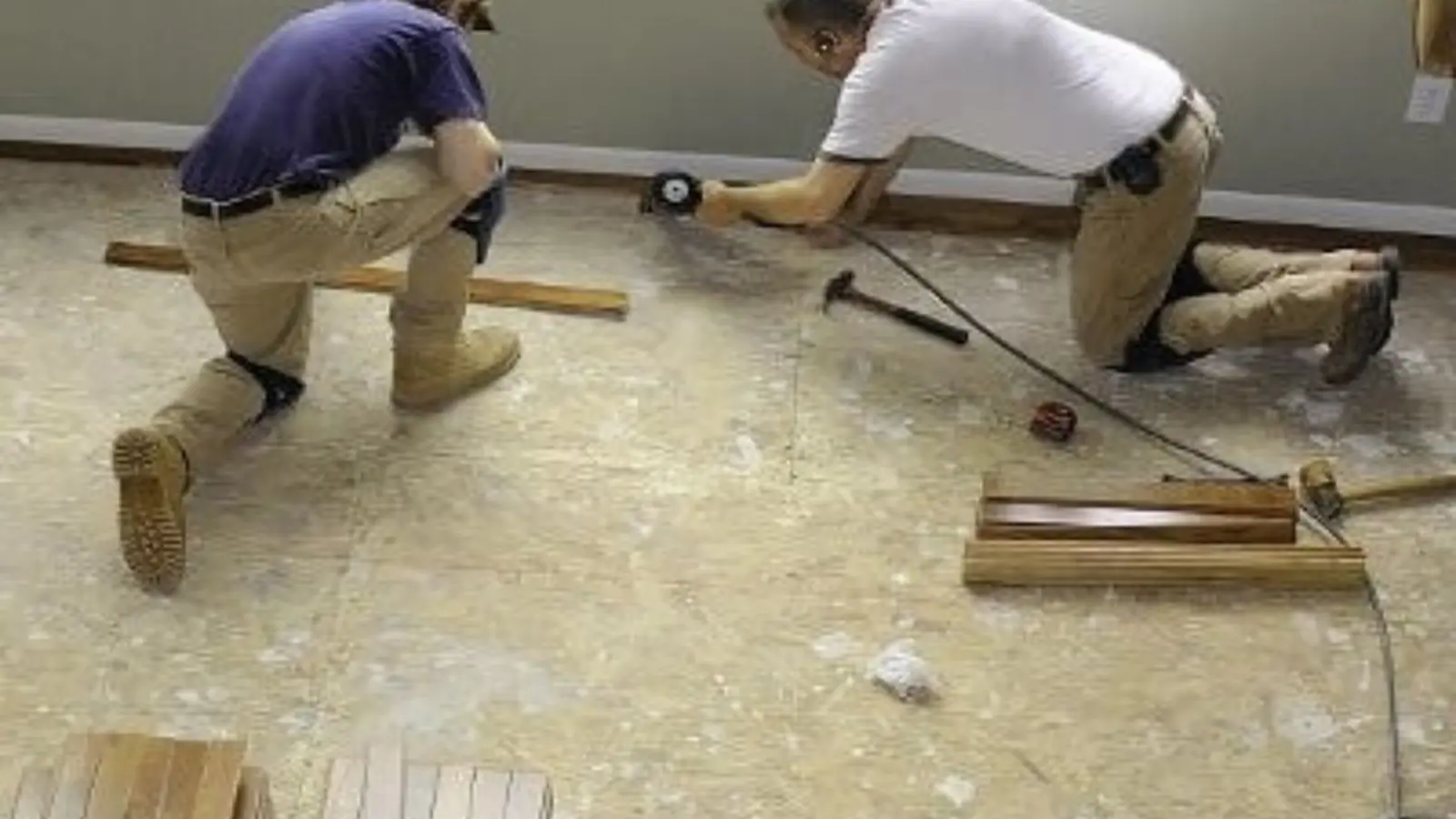
- Flooring. Replace carpet and pad, repair or refinish hardwood, replace laminate, vinyl plank and tile where needed.
- Trim and cabinets. Replace baseboards, casing and base cabinets that swelled or delaminated.
- Paint. Prime stained areas with a stain-blocking primer, then paint to match.
- Fixtures and finish work. Reset outlets, switches and fixtures that were removed for drying.
Ceiling and wall water damage repair
Ceilings and walls take the first hit when a pipe leaks above or a roof lets rain in. Water travels along framing and often shows up a few feet from the real leak, so the stain you see may not mark the source.
The fix has four steps. First, find and stop the source. Second, open the ceiling or wall enough to check the cavity with a moisture meter. Third, dry and, if needed, replace insulation and drywall. Fourth, tape, texture and paint so the repair disappears.
Bubbling paint, a brown ring, a soft spot or a sag are signs the drywall has absorbed water. Pushing a finger into a sagging ceiling can bring it down, so keep clear and place a bucket under any drip. A collapsed ceiling is common when water sits above for days.
Stain-blocking primer matters. Regular paint over a water stain will let the stain bleed through in weeks. The crew primes the patch first, and then matches paint and texture so the room does not show the repair.
Hardwood and laminate floors after water
Wood swells when it takes on moisture, which is why a floor can cup, with the edges higher than the center, after a washing machine hose failure or a slow leak under a kitchen sink. The cure is drying first, then deciding whether the floor can be sanded flat or needs replacing.
Laminate and vinyl plank react faster. Laminate has a fiberboard core that swells at the seams when wet and does not return. If the boards have lifted at the edges or the click joints have opened, they are usually replaced. Water that got under the planks can stay trapped, so the subfloor is checked before new planks go down.
| Material | Often repaired when | Often replaced when |
|---|---|---|
| Painted drywall | Small dry stain, no softness | Soft, sagging or wet for more than a day or two |
| Solid hardwood | Mild cupping, dried to normal moisture | Crowned, buckled or loose from subfloor |
| Laminate | Rarely repairable once swollen | Swollen seams or lifted edges |
| Carpet | Clean water, dried promptly | Contaminated water or pad saturated for days |
| Cabinets | Surface dampness, solid wood bases | Particleboard bases that swelled |
Permits and inspections for repair work
Repairs in DeSoto can touch city rules. DeSoto Building Inspections says a permit is required to alter, repair or change a building and to replace electrical, gas, mechanical or plumbing systems. Work involving framing, insulation, electrical, plumbing or mechanical systems must be inspected before it is concealed.
In practice that means a replaced section of supply line or a rewired outlet may need an inspection before new drywall closes the wall. The city does not offer same-day inspections except in emergencies determined by the Building Official, and next-day requests are due by 4 p.m. the day before. Call 972-230-9610 early so the schedule does not hold up the rebuild.
Ready to plan the rebuild?
Call the line and describe the damage. The dispatcher explains how the assessment and scope of work are set.
Temporary repairs versus permanent repairs
The Texas Department of Insurance tells policyholders to photograph damage first and to make only temporary repairs before the insurer has seen it. Permanent repairs made too soon could lead to a denied claim.
Temporary repairs mean tarping a roof, boarding a window or closing a valve. Rebuilding drywall and flooring can wait until your adjuster has seen the damage. Ask your insurer when it is safe to start.
What affects the cost of water damage repair
- Rebuild scope. A patch costs far less than replacing a whole ceiling or floor.
- Materials. Matching hardwood or custom cabinets costs more than drywall and paint.
- Water category. Contaminated water adds removal and sanitizing before a rebuild.
- Area. More rooms mean more materials and more labor.
- Code work. Permits and inspections may be needed for plumbing or electrical changes.
Insurance may cover repairs after a sudden and accidental loss, and many policies do not cover slow leaks. Check your policy and ask your insurer. Want your real number? Call (972) 945-2885.
Repairs across DeSoto and nearby towns
The crew rebuilds homes and small businesses across DeSoto and the nearby towns. If drying has not started, read about water mitigation. If the loss involved a storm or drain backup, see flood damage restoration.
Homeowners in Lancaster and Red Oak can use the same crews for repairs that follow drying. Each town has its own page with ZIP codes and local notes.
How soon can repairs start after a water loss?
Repairs start after the structure is dry, which is confirmed by moisture readings and not by how the wall looks. Rebuilding over wet framing traps moisture and leads to mold, so the drying phase has to finish first.
The crew can often schedule repairs right behind the drying visits, so the rebuild does not wait for a second company to start from scratch.
Do I need a permit to repair water damage in DeSoto?
It depends on the work. DeSoto Building Inspections says a permit is required to alter or repair a building and to replace electrical, plumbing or mechanical systems. Painting and replacing drywall may not need one, while replacing a water heater does.
Call the city at 972-230-9610 before work starts. Anything involving plumbing, electrical or framing has to be inspected before it is covered up.
Can a water-damaged ceiling be patched, or does it need replacing?
A small stain from a past leak that has dried can often be sealed and painted. A sagging, bubbling or soft ceiling needs to be opened up, because wet drywall and insulation stay wet above the surface.
Cutting the damaged section out lets the crew dry the cavity, replace insulation and patch with new drywall that matches.
Will hardwood that cupped go back to flat?
Sometimes. Boards that cupped from moisture often flatten as they dry, and sanding and refinishing can fix mild cases. If the boards are crowned, buckled or loose from the subfloor, replacement is more likely.
The crew checks moisture content first. Refinishing a floor that is still wet only locks the problem in.
Will my insurer pay for the repairs?
Often, if the cause was a sudden and accidental event. A slow leak, poor upkeep and flood water are commonly excluded, and flood needs its own policy.
The Texas Department of Insurance tells policyholders to make only temporary repairs and to photograph damage before permanent ones, so the insurer can see it. Check your policy and ask your insurer.