
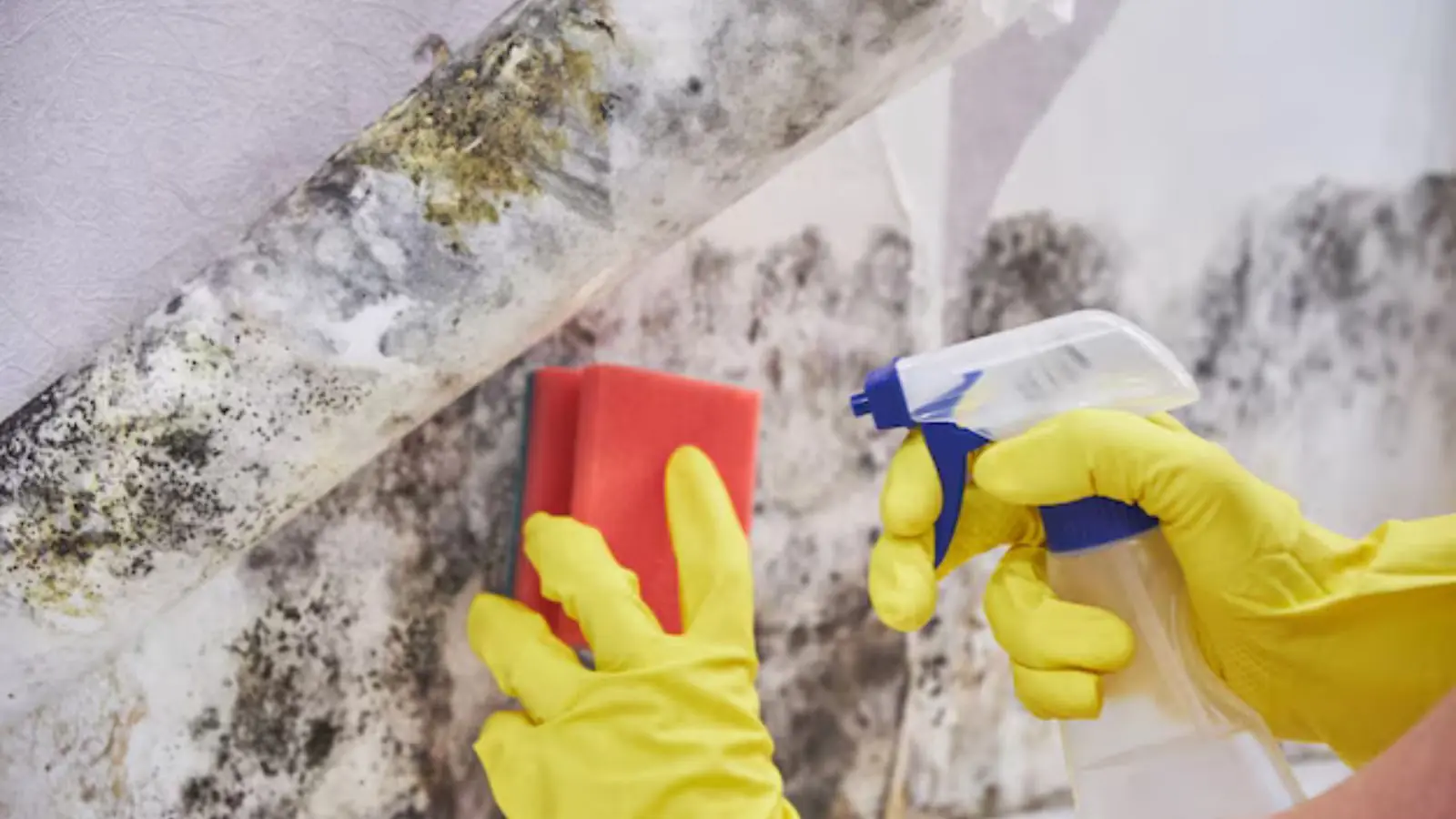
First, what kind of wall is it?
How to clean mold off walls in DeSoto, TX depends on what the wall is made of. Painted drywall, bare concrete block, tile and wood behave very differently. A wall that was only splashed can be cleaned. A wall that stayed wet has absorbed water, and cleaning the surface will not fix it.
Before you pick up a sponge, find the moisture source. A plumbing leak inside the wall, a roof leak running down it or a humid room all need fixing, or the growth will come back.
Wall types and what usually works
| Wall surface | Approach | Notes |
|---|---|---|
| Glossy painted drywall, small spots | Detergent and water, then dry | Stop if the paint peels or the board feels soft |
| Flat painted drywall with growth | Often cut out and replaced | Porous paper face holds growth |
| Tile and grout | Scrub with detergent | Fix grout cracks that let water behind the tile |
| Concrete or block | Scrub and dry | Check for water moving through the masonry |
| Wood framing | Clean and dry, replace if soft | Soft wood is rotting |
How to clean a small area safely
- Fix the leak or ventilation problem first.
- Wear gloves, eye protection and a mask rated for the work, and open a window.
- Keep the area closed off from the rest of the house and cover the floor.
- Scrub with a detergent solution and a damp cloth, not a soaked sponge.
- Dry the wall with a clean towel and a fan.
- Bag the cloths and dispose of them outside.
Avoid dry brushing, which sends spores into the air. Avoid mixing bleach, ammonia and other cleaners, since the combination can release harmful fumes. If you are unsure about a product, read its label.
When to cut the wall instead
If the wall is soft, stained in a ring, bubbled or smells musty after cleaning, the drywall or insulation inside is wet. Wiping the surface only hides the problem.
A crew opens the wall, dries the cavity with air movement and a dehumidifier and replaces the damaged sections. Ask for a moisture reading at the end to confirm it is dry before it is closed. See water mitigation for drying and water damage repair for the rebuild.
Texas note: the 25 square foot line and the information sheet
The Texas Department of Licensing and Regulation says areas of visible mold of less than 25 contiguous square feet can be cleaned up by people who are not licensed, although exemptions apply. Larger jobs, and any sampling, need licensed professionals.
Licensees must provide a Consumer Mold Information Sheet before any mold-related activity begins. If a company hands you a contract without that sheet, ask for it.
Documenting before you clean
Photograph the wall and the source before you clean. The Texas Department of Insurance says mold removal is generally excluded except to repair damage from a covered risk, so a record of a sudden event, such as a pipe burst, can matter.
Do not make permanent repairs before the insurer sees the damage. Cleaning a small patch is a temporary step, but removing a whole wall section is not. Ask your insurer if you are unsure.
Keeping walls clean
- Keep indoor humidity in a normal range and run bathroom and kitchen fans.
- Fix drips and condensation quickly.
- Leave a gap between furniture and exterior walls so air can move.
- Check closets, corners and behind cabinets after wet weather.
- Do not let wet items sit against walls.
Crews serve DeSoto and nearby towns, including Lancaster and Red Oak. The mold remediation page explains larger jobs.
Check what the wall is made of first
Painted drywall, bare drywall, plaster and wood paneling all respond differently. A hard painted surface can often be wiped, while bare paper-faced drywall soaks up moisture and may need to be cut out. Press the area gently. If it feels soft, crumbles or is stained through, cleaning the surface will not be enough.
Look at the back side when you can, such as inside a closet or behind a cabinet. Growth that continues behind the visible patch means the moisture is still present. Mark the edges of the stain with a pencil so you can tell later whether it is spreading.
Does cleaning mold myself affect an insurance claim in Texas?
It can. The state advises photographing damage first and making only temporary repairs before the insurer sees it. Cleaning a small patch is usually fine if you have documented it.
Ask your insurer before you remove larger sections.
Is vinegar or bleach better for walls?
Neither fixes moisture. Detergent and water do most of the cleaning on hard surfaces, and bleach lightens stains but does not penetrate porous materials.
Never mix bleach with ammonia or other cleaners.
How do I know the wall is dry again?
A moisture meter reads wall moisture and lets you compare to a dry wall in the same house. A wall that feels cool or damp may still be wet inside.
Do not paint until readings are normal.
What if the mold keeps coming back?
Moisture is still present. Look for slow leaks, condensation or humidity problems, and ask a professional to check with a moisture meter and thermal imaging.
Repeated cleaning without fixing the source wastes time.