
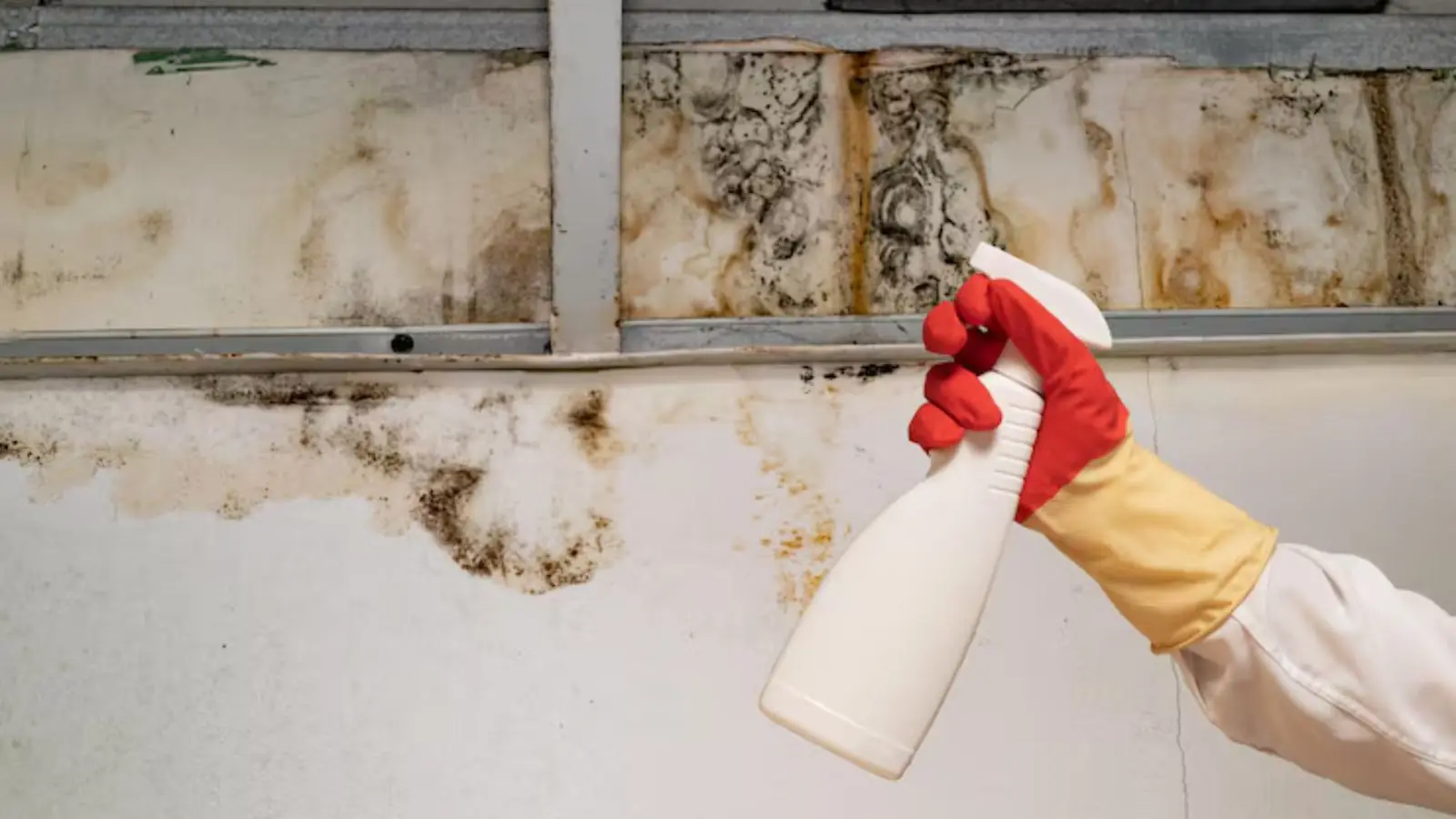
Killing mold is not the goal, removing it is
People ask how to kill mold in a basement in DeSoto, TX, but the useful question is how to remove it and keep it away. Dead mold can still leave material behind, and killing it on the surface does not dry the wall. Remediation is about removing growth, controlling spread and fixing the moisture.
That is also how the industry standard frames the work. The ANSI/IICRC S520 standard describes mold remediation as a controlled process, not a spray. You can ask any company whether its crews follow it.
What the common home remedies actually do
| Product | Where it can help | Limits |
|---|---|---|
| Detergent and water | Hard, non-porous surfaces such as sealed concrete and tile | Does not reach growth inside porous materials |
| Bleach | Hard surfaces only | Does not penetrate drywall or wood, and never mix it with ammonia |
| Vinegar | Light surface cleaning | Not a drying or moisture fix |
| Dehumidifier | Keeping a dried space dry | Does not remove growth |
| Paint or sealer | Finishing after cleaning and drying | Hides but does not fix wet walls |
Spraying products into a wet wall can add moisture and leave the root problem in place. Do not combine chemicals, and ventilate whenever you use any product.
The right order of work
- Find the water source and stop it.
- Remove porous materials that stayed wet, such as carpet, pad and soft drywall.
- Dry the space with air movers and a dehumidifier until readings are normal.
- Clean hard surfaces with detergent and damp wipes, using HEPA vacuuming for dust.
- Rebuild and monitor humidity afterward.
Dry steps come before clean steps. A clean surface that stays wet grows again.
Where Texas rules draw the line
The Texas Department of Licensing and Regulation says visible mold of under 25 contiguous square feet can be cleaned up by people who are not licensed, although exemptions apply. For larger areas the work has to follow a protocol written by a licensed assessor and be done by a licensed remediation contractor.
When the job is done, a licensed remediator can issue a Certificate of Mold Damage Remediation to the property owner. That certificate is governed by the state insurance code. It matters if you plan to sell or refinance, and it is something to ask about before the job starts.
Texas note: who licenses mold professionals
Texas licenses mold assessors and mold remediators through the Texas Department of Licensing and Regulation. Mold assessment means inspecting and testing, including collecting samples, and the samples must go to a licensed lab. A real estate inspector may note visible mold without a license but needs a license to collect samples.
Ask for a license number before work or sampling starts, and ask for the Consumer Mold Information Sheet that licensees must give before any mold-related activity begins.
Signs the problem is bigger than mold
- Water enters during rain, which points to drainage or foundation, not just humidity.
- A musty smell remains after cleaning, which suggests moisture in a wall or floor.
- Efflorescence, a white powder on concrete, points to water moving through the masonry.
- Floors feel soft above a crawl space, which can mean long-term moisture.
- Sewage smell or backup means contamination, not just mold.
See water mitigation for how crews dry a structure and mold remediation for testing and removal. Crews also serve Lancaster and Red Oak.
Dry the room before you treat it
Killing mold on a surface does little if the room stays damp. Run a dehumidifier sized for the space, empty it daily and keep the door to the stairs open so air moves. Fans help, but only after standing water is gone.
Move boxes and furniture off the floor and away from the walls. Cardboard and fabric hold moisture and give growth a second place to start. Once humidity stays steady for several days, you can judge more clearly what actually needs cleaning or removal.
Be realistic about porous materials. Carpet, insulation and unfinished drywall that have stayed wet for days are often better removed than treated, because growth reaches below the surface. Hard surfaces such as sealed concrete and metal shelving are usually easier to clean and dry. Bag removed material before carrying it through the house, and keep the work area closed off from the rest of the home while you work.
Which Texas agency licenses the mold professionals who work in DeSoto?
The Texas Department of Licensing and Regulation licenses mold assessors and remediators statewide, so the same rules apply in DeSoto as anywhere in Texas.
Ask to see a license before testing or removal starts.
Is bleach a good way to kill basement mold?
Bleach can lighten stains on hard surfaces but does not penetrate porous materials and does not fix moisture. Never mix it with ammonia or other cleaners.
For drywall or wood that stayed wet, removal is the answer.
Can I rent a fogger or use an ozone machine?
These treatments do not replace removal and drying. They can also add risks if used in the wrong way, so ask a licensed professional before using them.
The standard approach is source repair, containment, removal and drying.
How do I check that the basement is dry enough to finish?
Use a moisture meter on walls and the slab and compare readings to unaffected areas. Keep humidity in a normal range with a simple hygrometer.
If readings stay high, find the source before finishing.