
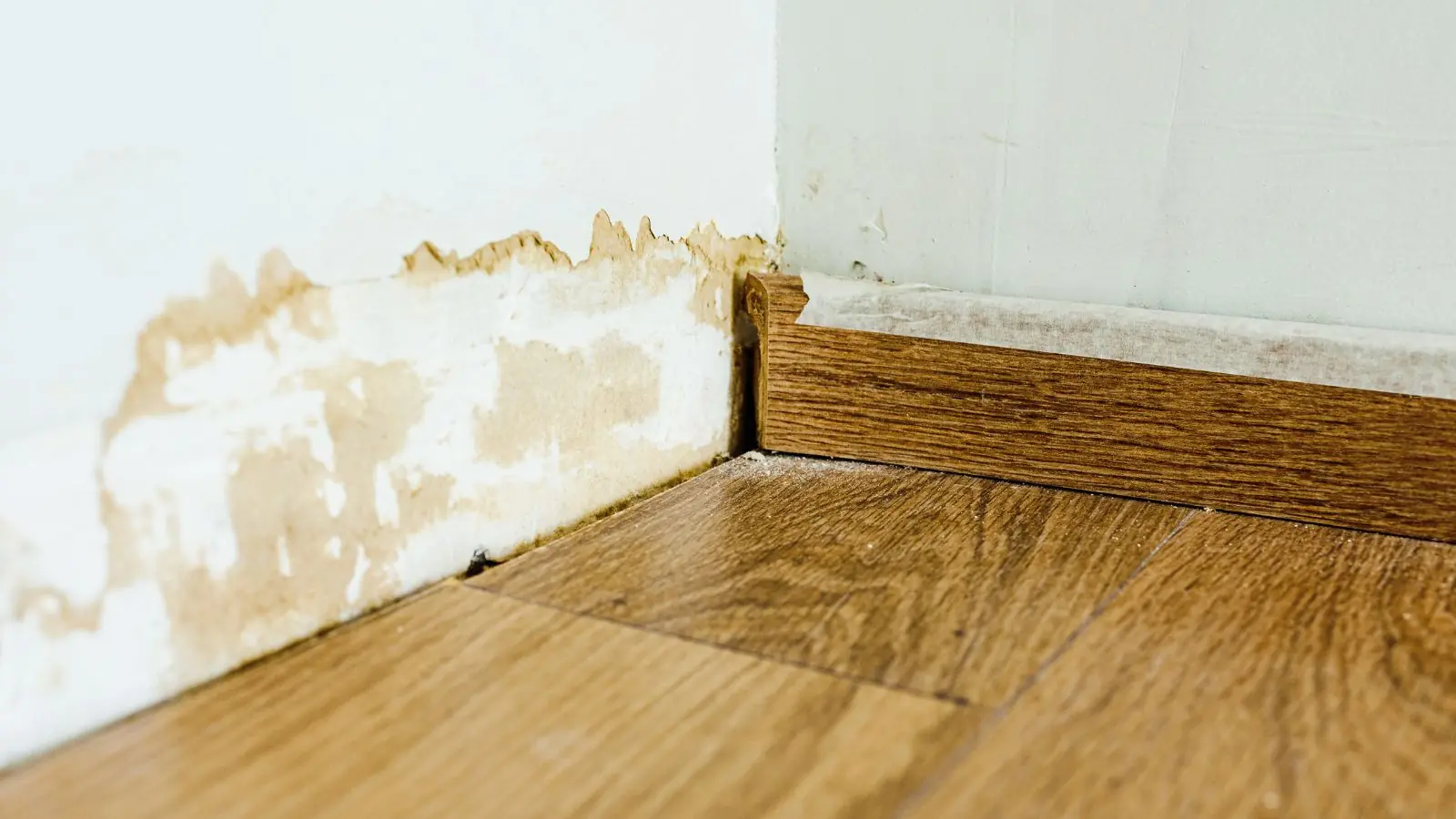
Why laminate reacts so badly to water
Laminate floor water damage in DeSoto, TX is common because of how the floor is made. A photographic layer sits on a fiberboard core. When water reaches the core, usually at the seams, it swells and does not shrink back. That is why a spill that sits for an hour can ruin a plank while a mop-up on tile leaves no mark.
Water usually gets in at the edges, through the click joints or from underneath. A leak from a dishwasher, refrigerator line, washing machine or water heater can run under the planks, where you cannot see it.
Signs the floor took on water
- Edges that lift or peak along the seams.
- Planks that cup or bulge in the middle.
- Gaps or buckling where the floor expands.
- A musty smell or discoloration at the baseboards.
- A soft or spongy feel underfoot.
Press the floor with a flat hand. If it flexes or feels damp, water is below the surface.
What to do in the first hours
- Stop the source and mop or extract standing water.
- Remove rugs and furniture from the wet area.
- Lift baseboards if you can so air gets behind them.
- Set fans and a dehumidifier to run across the floor.
- Photograph the damage before anything moves.
Speed matters. Water that sits under planks for a day or two can warp the floor beyond saving. A professional can use mat drying systems that pull moisture from under floating floors.
| Condition | Likely outcome | Why |
|---|---|---|
| Spill wiped within minutes | Usually fine | Water did not reach the core |
| Wet planks, edges not yet lifted | May be saved with fast drying | Core has not swelled |
| Lifted edges or cupped planks | Replace affected planks | Swollen core does not recover |
| Wet underlayment or subfloor | Open up and dry the subfloor | Trapped moisture grows mold |
| Contaminated water | Replace and sanitize | Porous materials hold contamination |
The subfloor matters as much as the planks
Replacing planks over a wet subfloor wastes money. Check the underlayment and the plywood or concrete below with a moisture meter. Wet plywood needs to dry fully or be replaced, and concrete can hold moisture for weeks.
If the floor sits over a crawl space, check that space for standing water or damp insulation. Moisture from below can ruin a floor that never got wet from above.
DeSoto note: water heater leaks and the permit rule
A failing water heater is a classic cause of laminate damage. DeSoto Building Inspections lists water heater replacement among common homeowner projects that require a permit and an inspection. The city page also says a gas water heater in or accessible from the garage must be raised 18 inches above the floor when it is replaced.
Ask your plumber to pull the permit, and call 972-230-9610 if you have questions. Electric water heaters are not required by code to be elevated, according to the same page.
Insurance and what to document
A sudden and accidental water release, such as a failed appliance line, is often covered by homeowners insurance. A slow leak that damaged the floor over months often is not. Check your policy and ask your insurer.
Keep a few damaged planks as evidence if your insurer asks, and photograph the source, such as a split hose or leaking tank. Make only temporary repairs until the insurer has seen the damage, as the Texas Department of Insurance advises.
For drying and rebuilding, see water mitigation and water damage repair. If the leak is active, emergency water removal covers what to do now. We also serve Cedar Hill and Lancaster.
How to tell whether planks can be saved
Run your hand along the seams. Edges that have lifted, a faint crunch underfoot or swelling at the joints suggest the core board has absorbed water. Once that fiberboard swells, it rarely returns to its original shape.
Lift one plank near the wall if you can and look underneath. A damp underlayment, dark staining or a musty smell means moisture is trapped below. Floating floors can sometimes be taken up and dried, but ask a technician to read the subfloor before you relay anything.
If only a small area is affected and the planks click together, a technician may replace just that section. Keep a few spare planks from the original install when you can, since matching the pattern years later is difficult. Photograph the damage before anything is removed so an insurer can see what the floor looked like.
Do I need a permit in DeSoto to replace a water heater that leaked onto my laminate?
Yes, the city lists water heater replacement as work that requires a permit and an inspection. A gas water heater in or reachable from a garage must be raised 18 inches above the floor when replaced.
Call DeSoto Building Inspections at 972-230-9610 with questions.
Can swollen laminate go back to normal?
Rarely. The fiberboard core swells and does not shrink back, so lifted or cupped planks are usually replaced.
Drying fast before the edges lift gives the best chance.
Can I replace only the damaged planks?
Often yes, if the product is still available and the subfloor is dry. A mismatch in color or wear can show, so some owners replace a whole room.
Keep spare planks from the original install if you can.
Will mold grow under laminate?
It can if the subfloor or underlayment stays wet. Moisture under a floating floor has nowhere to go.
A moisture meter checks the subfloor before new planks go down.